Catégorie
A wardrobe is an essential piece of furniture for organising your clothes efficiently and making your daily life easier. At a time when homes are becoming increasingly smaller, investing in a made-to-measure wardrobe is the ideal solution to overcome a lack of storage space. Suitable for both large bedrooms and small spaces, this piece of furniture can meet all needs and suit all budgets. Here are our tips for making the right choice and creating a bespoke wardrobe that truly meets your storage needs.
The key criteria for choosing the right made-to-measure wardrobe
A bespoke wardrobe is made to the nearest millimetre to fit perfectly into the layout and design of the room where it is to be installed. To achieve this, precise details such as dimensions, shape and finishes must be taken into account.
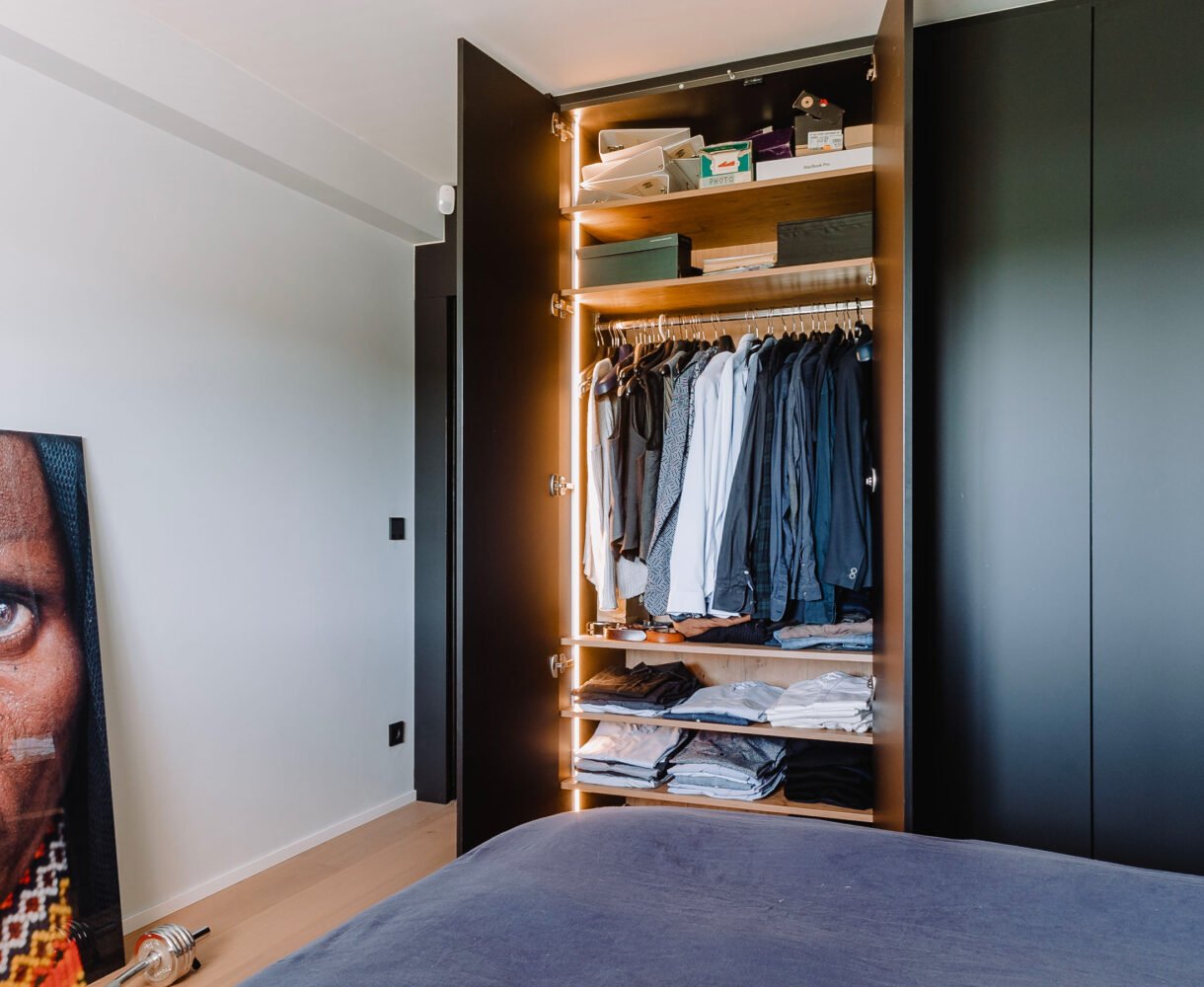
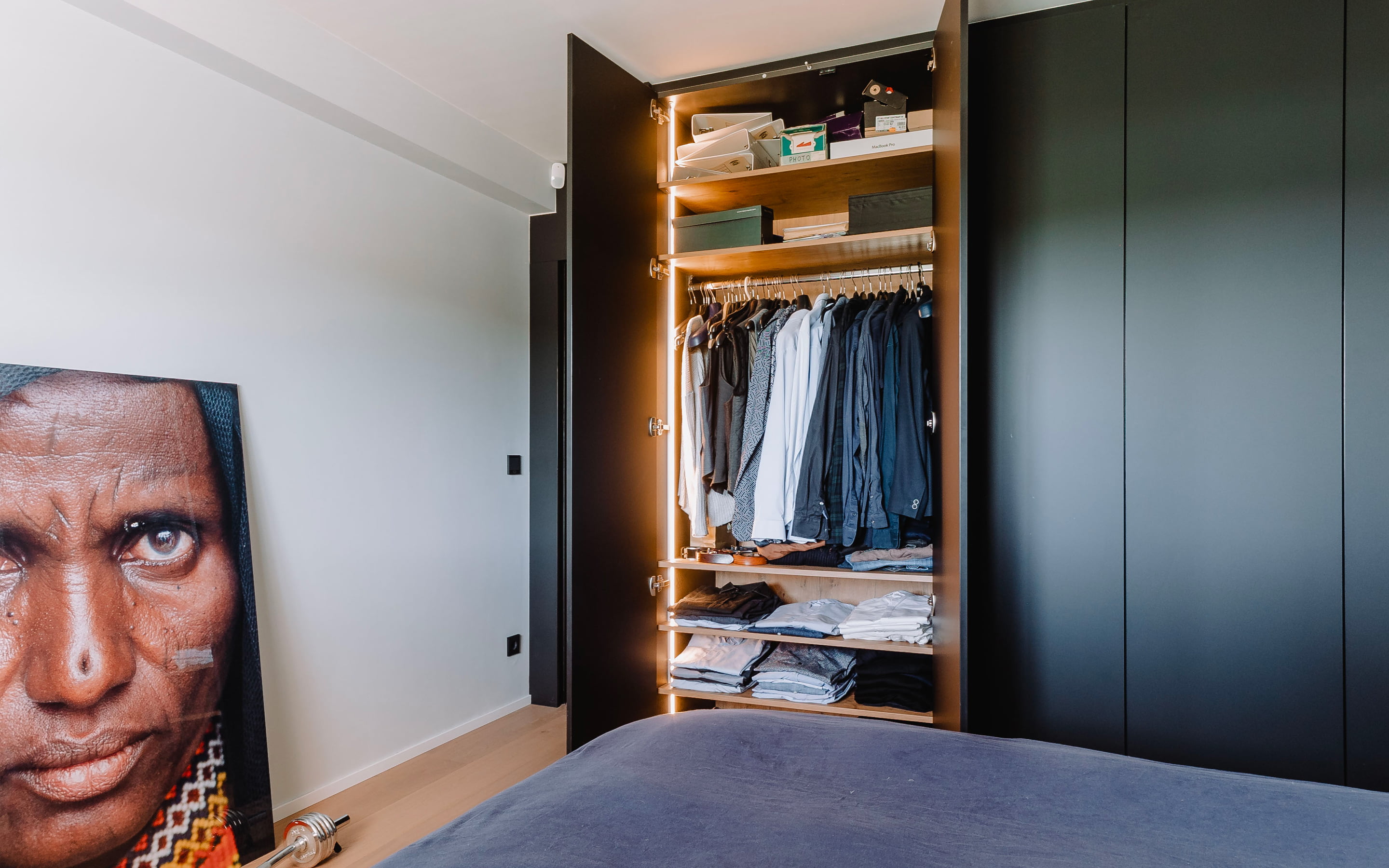
A made-to-measure wardrobe comes in various shapes. It can be designed in an I-shape, an L-shape or a U-shape, depending on the size of the room. The interior layout depends on the number of accessories and items of clothing you plan to store in it. It can therefore consist of several modules, including a hanging rail, shelves and drawers.
As for the finish, it should complement the overall look of the room. It should blend in with the existing décor so that you don’t have to redecorate the whole bedroom. People often choose furniture made of wood, PVC, melamine or lacquered glass, as these materials are commonly used in the manufacture of home furnishings.
In terms of size, a minimum depth of 50 cm is essential to ensure there is enough space to store clothes that have been folded properly. Ideally, allow 2 m² of storage space per person.
Choose the cupboard door opening style to suit the layout of the room
Bespoke wardrobes are valued for their ability to adapt to any room, whether in terms of height, width or depth. However, it is important to choose the right type of door opening for the wardrobe, depending on the layout of the bedroom.
You can choose between:
- A bespoke wardrobe with sliding doors: this piece of furniture is particularly well-suited to long and/or narrow rooms. It helps to avoid problems with space constraints. It can therefore be installed in a small bedroom, or even in a hallway.
- A made-to-measure wardrobe with hinged doors: this type of storage is best suited to large spaces. This is because the doors take up quite a lot of space when open. To avoid being restricted when putting things away in the wardrobe or taking something out, it is strongly recommended that you leave a gap of at least one metre between the wardrobe and any other furniture.
- A made-to-measure wardrobe with folding doors: this piece of furniture is suitable for any setting. It blends in perfectly with the room and is practical.
Determine the dimensions of your made-to-measure wardrobe
A bespoke wardrobe can be fitted anywhere in the home. As well as traditional bedrooms with flat ceilings, there are, for example, bedrooms with sloping ceilings, fitted in converted loft spaces. This type of furniture takes into account the slope of the ceiling and its low height. A made-to-measure wardrobe is also an excellent solution for making the most of wasted space, such as the area under a staircase. To ensure the wardrobe fits the available space, you’ll need to measure the room where it will be placed carefully. You’ll also need to decide in advance how many shelves, drawers and hanging rails you’ll need.
Various technical constraints will also need to be taken into account. These include, for example, the position and size of openings (doors, windows), and the width of the walls against which the cupboard can be placed. You should also consider high or low ventilation outlets, electrical sockets, access to pipes for moisture extraction and the possible presence of a thermostat.
Bespoke wardrobes: how to organise them effectively?
Estimating the amount of storage space is an important factor to bear in mind when designing a bespoke wardrobe. The first step is to measure and count your belongings, then sort them by type. This helps you to work out how much space you’ll need to store all your clothes and accessories. It’s also a good way to avoid wasting space.
It is also important to organise the inside of the wardrobe properly. You could include hanging rails, drawers, shelves…
When it comes to dimensions, it is crucial to know the minimum measurements to ensure you have enough space to store your belongings properly. With this in mind, allow 80 cm in height for a rail designed to hold shirts and trousers. A height of 170 cm is required to provide enough space to hang dresses or coats. In all cases, the depth of the wardrobe section should be at least 60 cm to avoid unnecessarily creasing your clothes. As for the shelves, you’ll need a minimum depth of 45 cm to be able to store folded clothes properly. Note that you can install a shelf every 30 cm.
Choose a genuine professional to build your bespoke wardrobe
To ensure you have a high-quality piece of furniture, it is advisable to have it made by genuine professionals. This applies to all types of furniture, including a bespoke wardrobe. It is therefore important to take the time to research the professional’s previous work, with supporting photographs, before selecting the specialist craftsman who will make the furniture. Furthermore, a conscientious and competent specialist will be able to provide a detailed quote. This document will set out all the work to be carried out, from taking measurements to installation. It will also detail the cost of materials and labour.
When it comes to price, it is important to note that the cost of bespoke furniture varies depending on several factors, including the volume, the material, the type of wood if it is made from a natural material, and the interior fittings.
A project that
might interest you